How fast should Irish tunes be played?
Almost every published tempo for Irish music is unusable, because the number is given without saying what one beat is. A reel and a hornpipe both listed at 113 are running at 56.5 and 28.3 bars per minute. Here are the figures with their units named.
By TradTabPublished
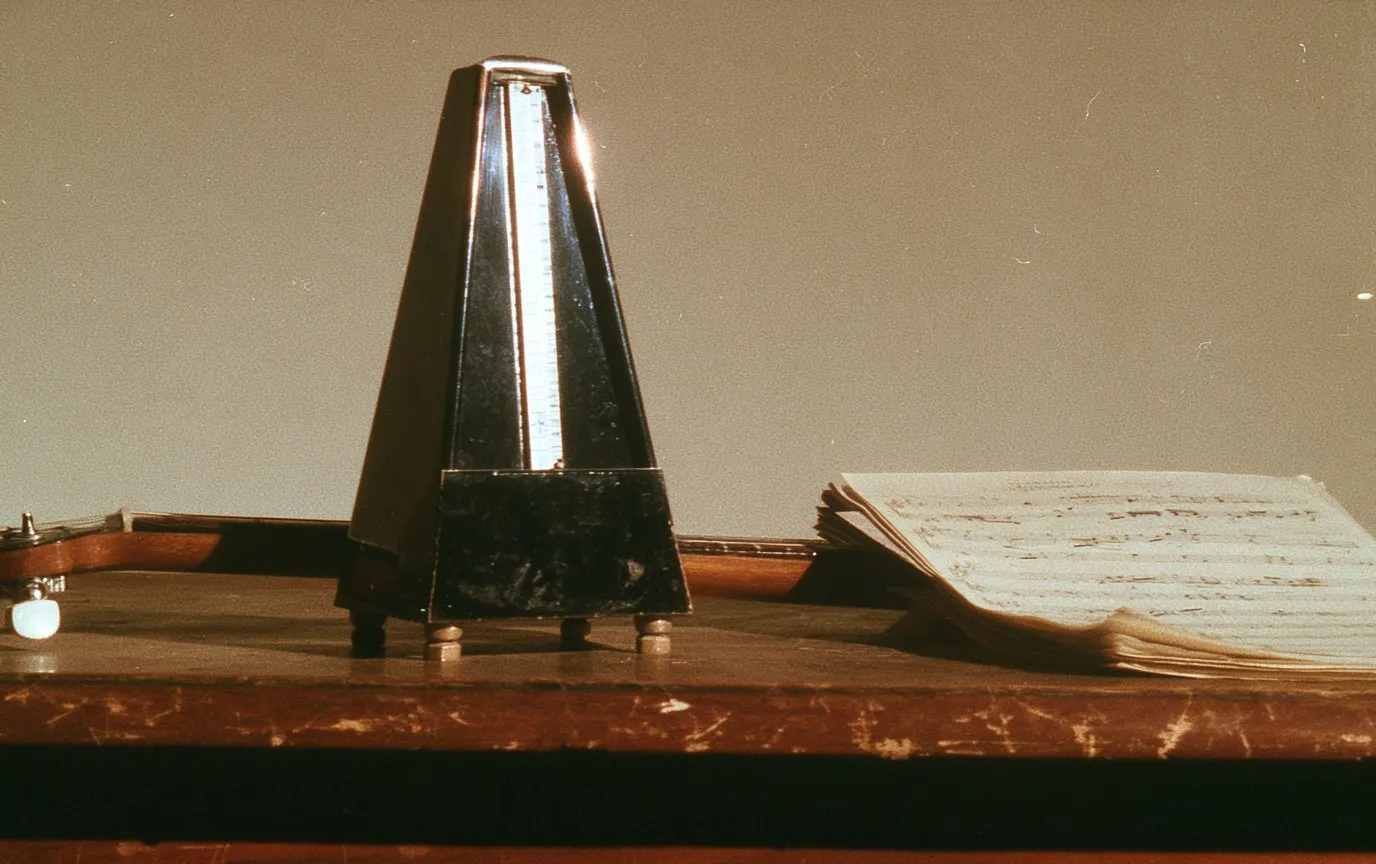
- A bar is
- One repeating group of beats. Irish tunes are counted in bars, not in notes
- Bars per minute means
- How many of those groups go past in a minute
- Reel
- 50 to 62 bars a minute. Metronome at 100 to 124
- Jig
- 54 to 62 bars a minute. Metronome at 108 to 124
- Hornpipe
- 40 to 50 bars a minute. Metronome at 160 to 200
- The mistake everyone makes
- Setting the metronome to the wrong note value, so the number comes out two or three times too fast
What is a bar, and what is bars per minute?
A bar is one repeating group of beats, and bars per minute is how many of those groups go past in a minute. Both need spelling out before any tempo number on this page means anything, and almost nobody bothers.
A bar is one repeating group of beats. Music is counted in these groups, and every Irish tune type has a fixed size of group: a reel has two big pulses in a bar with eight quick notes underneath, a jig has two pulses with three notes inside each, a slip jig has three. When a musician counts a tune in, they are counting a bar.
Bars per minute is simply how many of those groups go past in a minute. Dancers and set musicians count this way because it describes the music. A reel at 52 bars a minute means 52 of those groups every minute.
A metronome does not count bars. It clicks individual beats, and a beat is smaller than a bar. So the number you type into a metronome app is always bigger than the bars-per-minute figure, and how much bigger depends on the tune type. That single fact is the source of nearly every tempo mistake in Irish music.
A half note and a dotted quarter note are just names for how long one beat lasts. You do not need to read music to use them. You need to know which one your metronome should be clicking, and the table further down tells you per tune type.
The fastest way past all of this is to hear it. Press play below.
These tune types run at almost the same speed, so speed is not what tells them apart. What tells them apart is the shape of the bar. Press play and listen for three sounds: the highest click starts the bar, the middle ones are the pulses inside it, and the quiet ones are the notes inside each pulse. A jig repeats every six notes. A slip jig repeats every nine.
- Reel2/2Two pulses to the bar, four even notes inside each. It drives.The Silver SpearpeakfiddlerCooley's and The Maid Behind the BarRAPALJEMore on YouTube8 notes to the bar50 to 62 bars a minuteone metronome click is a half note
- Jig6/8Two pulses, but THREE notes inside each. Diddly-idle, diddly-idle.The Kesh JigTunes From DoolinConnaughtman's RamblesTunes From DoolinMore on YouTube6 notes to the bar54 to 62 bars a minuteone metronome click is a dotted quarter
- Hornpipe4/4Four pulses, two notes each, and swung so the pairs are long-short.The Boys of BluehillTunes From DoolinThe Boys of BluehillLiz FaiellaMore on YouTube8 notes to the bar40 to 50 bars a minuteone metronome click is a quarter note
- Slip jig9/8A jig with THREE pulses instead of two. It lilts rather than drives.Slip jig, reels and a hornpipeLobke SprenkelingMore on YouTube9 notes to the bar38 to 41 bars a minuteone metronome click is a dotted quarter
- Polka2/4Two pulses, two notes each. Fast, light and the fewest notes in the tradition.More on YouTube4 notes to the bar60 to 70 bars a minuteone metronome click is a quarter note
100% is the middle of each published session range, which is genuinely fast: a reel at 56 bars a minute is seven and a half clicks every second. Sound is generated in your browser, nothing is recorded and no audio is downloaded. Video links open on YouTube.
Why do published Irish tempos not work?
Irish sources quote tempo in three different ways and rarely say which one they are using. The dance world quotes bars per minute. Metronome apps count individual beats. And the beat itself is a different note value depending on the tune type.
The Irish dancing commission lists a reel at 113 and a hornpipe at 113. Those are not the same speed. A reel is counted in 2/2, so one click is a half note and 113 means 56.5 bars per minute. A hornpipe is counted in 4/4, so one click is a quarter note and 113 means 28.3 bars per minute. The same number, exactly double the music.
This is why a beginner setting a metronome from a website often ends up at two or three times the right speed and concludes they are hopeless. The advice was fine. The unit was missing.
| Tune type | Notation | Beats per bar | One click is |
|---|---|---|---|
| Reel | 2/2 | 2 | a half note |
| Hornpipe | 4/4 | 4 | a quarter note |
| Jig | 6/8 | 2 | a dotted quarter note |
| Slip jig | 9/8 | 3 | a dotted quarter note |
| Polka | 2/4 | 2 | a quarter note |
| Slide | 12/8 | 4 | a dotted quarter note |
How fast is each Irish tune type?
A reel runs 50 to 62 bars a minute, a jig 54 to 62, a hornpipe 40 to 50. The full table is below and both of its columns describe the same speed. Bars per minute is what dancers and set musicians count. The metronome column is what you type into a phone app, and it only means anything with the note value beside it.
| Tune type | Bars per minute | Metronome | One click is |
|---|---|---|---|
| Reel | 50 to 62 | 100 to 124 | half note |
| Jig | 54 to 62 | 108 to 124 | dotted quarter |
| Hornpipe | 40 to 50 | 160 to 200 | quarter |
| Slip jig | 38 to 41 | 113 to 124 | dotted quarter |
| Polka | 60 to 70 | 121 to 140 | quarter |
| Slide | 37 to 41 | 132 to 163 | dotted quarter |
| Strathspey | about 32 | see note | quarter |
| Air | no tempo | no tempo | free rhythm |
Are session and set dancing tempos different?
Yes, and by a wide margin: a listening session runs reels around 50 to 55 bars a minute where set dancers want 58 to 62. Do not average the two, because they are separate jobs. A pub session where people are listening runs reels at roughly 50 to 55 bars per minute. Set dancers want 58 to 62, because the dance needs the drive.
Instructional recordings are slower again, often around 41 bars per minute for a reel. That is a teaching speed and not what you will meet on a Tuesday night.
Competition speeds are different from both and are set by the dancing organisations rather than by musicians. They also vary by grade, with beginner grades played faster rather than slower, which catches people out.
Where do these tempo figures come from?
The bars-per-minute ranges are Alan Ng's, from irishtune.info. The competition figures are from the Irish dancing commission's own published rules. The dance-world figures come from set dancing groups who publish both the bars per minute and the metronome equivalent, which is what makes it possible to work out which unit everyone else means.
Two tune types have no published tempo anywhere we could find: the barndance and the mazurka. No organisation publishes one and no reference work gives one. We have left them out rather than estimate, because a made-up number is worse than an absent one.
Slow airs have no tempo at all, and that is not a gap in the research. Free rhythm is the defining feature of the form. Any source giving you a BPM for a slow air has invented it.
How do you set a metronome for Irish tunes?
Set the metronome to the note value in the table, not to the eighth notes you are playing. For a jig that means the dotted quarter, so two clicks per bar rather than six. Getting this wrong by a factor of three is the single most common practice mistake.
The metronome on this site does that part for you: pick the tune type and it clicks the right note value at session tempo, with the number of beats to the bar accented so you can hear where the bar starts.
Then start well below the session range. Every tune on this site has playback with a speed control, and the useful habit is to find the fastest speed at which you make no mistakes at all, sit there until it is dull, and only then move up.
Questions about Irish tune tempos
Between 100 and 124 beats per minute counting half notes, which is 50 to 62 bars per minute. If your metronome is counting quarter notes, that is 200 to 248, and if it is counting the eighth notes you are actually playing it is 400 to 496. The number is meaningless without the note value.
Because the number counts a different note in each. A reel is counted in 2/2 so one beat is a half note, and a hornpipe in 4/4 so one beat is a quarter note. The same figure of 113 gives 56.5 bars per minute for the reel and 28.3 for the hornpipe.
54 to 62 bars per minute, which is 108 to 124 dotted quarter notes. Set your metronome to the dotted quarter and you get two clicks per bar. Setting it to the eighth note instead gives six clicks per bar and a number three times too high.
Whatever speed you can play with no mistakes at all, which will be well under the session range and that is fine. Speed is a consequence of accuracy rather than something practised directly. Every tune here has playback with a speed control for exactly this.
No. Competition speeds are set by dancing organisations rather than by musicians, and they vary by grade. Beginner grades are usually played faster than advanced ones, which catches people out. A pub session is slower than a competition and slower again than a set dance.
A slow air has no tempo. It is played in free rhythm, with the phrasing following the words of the song it came from, so two players will never play one the same way. Any source giving a BPM for a slow air has made it up.
Keep reading
 Read the guide
Is the Irish tenor banjo hard to learn?
Easier than the fiddle, harder than it looks on YouTube. The notes come quickly and the right hand takes years. Here is an honest account of what is actually difficult, what is easier than people expect, and how long it takes to be useful at a session.
Read the guideFive easy Irish tunes for tenor banjo, in learning order
Begin with a repeated phrase, then add jig rhythm, string crossings and longer runs. Each tune below links to one specific setting, with a skill to practise and a phrase to watch.
 Read the guide
Mandolin vs tenor banjo tuning: the octave difference
A mandolin is tuned G3 D4 A4 E5. An Irish tenor banjo is tuned G2 D3 A3 E4, one octave lower. Both use GDAE in fifths, so the same string and fret numbers give the same tune in different octaves.