New tunes
The tunes too new for the out-of-copyright books this site is built from: The Kesh, Cooley's and everything since, sent in by the people who play them. Each one is a setting, one player's version of a tune, and a person reads every submission before it goes up.
Each one arrived as ABC notation, which is a plain-text way of writing a tune that Irish traditional music has used online for thirty years. The staff notation and the tablature underneath it are drawn in your browser from that text. The fret numbers suit any instrument tuned GDAE, which means G, D, A and E from the low string up: tenor banjo, mandolin and octave mandola all read the same tab.
Nothing has been published yet.
This page fills up as players send tunes in. If you have a setting of something worth having, it takes a title, the ABC and a line about where it came from.
Submit a settingWhy does one tune have more than one version?
Because this music is passed on by ear, and everybody who picks a tune up changes it a little. What one player calls The Kesh and what another calls The Kesh can differ in a dozen small ways and both be right.
A setting is what one player actually plays: the same skeleton of a melody carrying their own rolls, triplets and passing notes. Printing a single version and calling it the tune is something Irish traditional music has never done, so this page holds versions side by side rather than picking one.
How does a setting get onto this page?
Somebody sends it in and a person reads it before it appears. A submission arrives marked pending and the database refuses to move it: there is no route by which a submitter can publish their own, which is enforced in Postgres rather than by a promise on a page.
Traditional melodies are anonymous and unowned, and writing one down is not authorship, so a plain transcription of a tune that already exists is a weak thing for anyone to claim. A tune with a named living composer is a different matter and does not belong here.
Why are these separate from the 2,700 tune pages?
Because the tune library is built as files ahead of time and this page is not. Every tune page on this site is generated once and served as a finished file, which is what makes them fast, and it also means a setting approved this morning cannot appear on one of them until the site is next rebuilt.
This page asks the database every time it loads, so an approved setting is visible the same day. The main library catches up at the next build.
Can I print one of these or change the key?
Yes, both, through the converter. Open the ABC source under any setting, copy it, and paste it in there. From that page you can move the tune up or down by semitone, switch to bouzouki or guitar tuning, and print the tab on its own without the navigation or anything else around it.
What else do people ask?
A way of writing a tune in plain text, invented by Chris Walshaw in the 1990s and the standard way traditional players have shared tunes online ever since. A letter is a note, a number after it sets the length, and a few header lines give the title, the metre and the key. Every setting on this page arrived as ABC, and the notation and tab you see are drawn from that text in your browser.
Two people can be named and they are often not the same person. The submitter is credited by whatever their profile says, which is their handle, their name, or nothing at all if they chose anonymous. If the ABC carries a Z: header, which is where ABC records who wrote the tune out, that name is shown as the transcriber alongside it.
Yes, as long as you say where it came from. Paste the link if there is one. It is shown with the tune so whoever typed it out keeps their name on it, and it means the origin of every setting on this page can be traced later.
Tenor banjo, mandolin and octave mandola, which are all tuned GDAE and therefore share one set of fret numbers. GDAE means the four strings are tuned to G, D, A and E, low to high. For a GDAD bouzouki or for guitar, paste the ABC into the converter and pick the instrument there.
Either it is still in the queue or it was turned down. There is one moderator and no promise attached to how fast the queue moves. Anything you have sent, and the note back if there is one, is listed at the bottom of the submit page.
The 2,700 tune pages are built ahead of time from collections published before 1929. A setting sent in today cannot appear on one of those pages until the site is next rebuilt, and this page reads the database live, so it shows up here first.
Keep playing
Send in a version of your own, or go find the next tune.
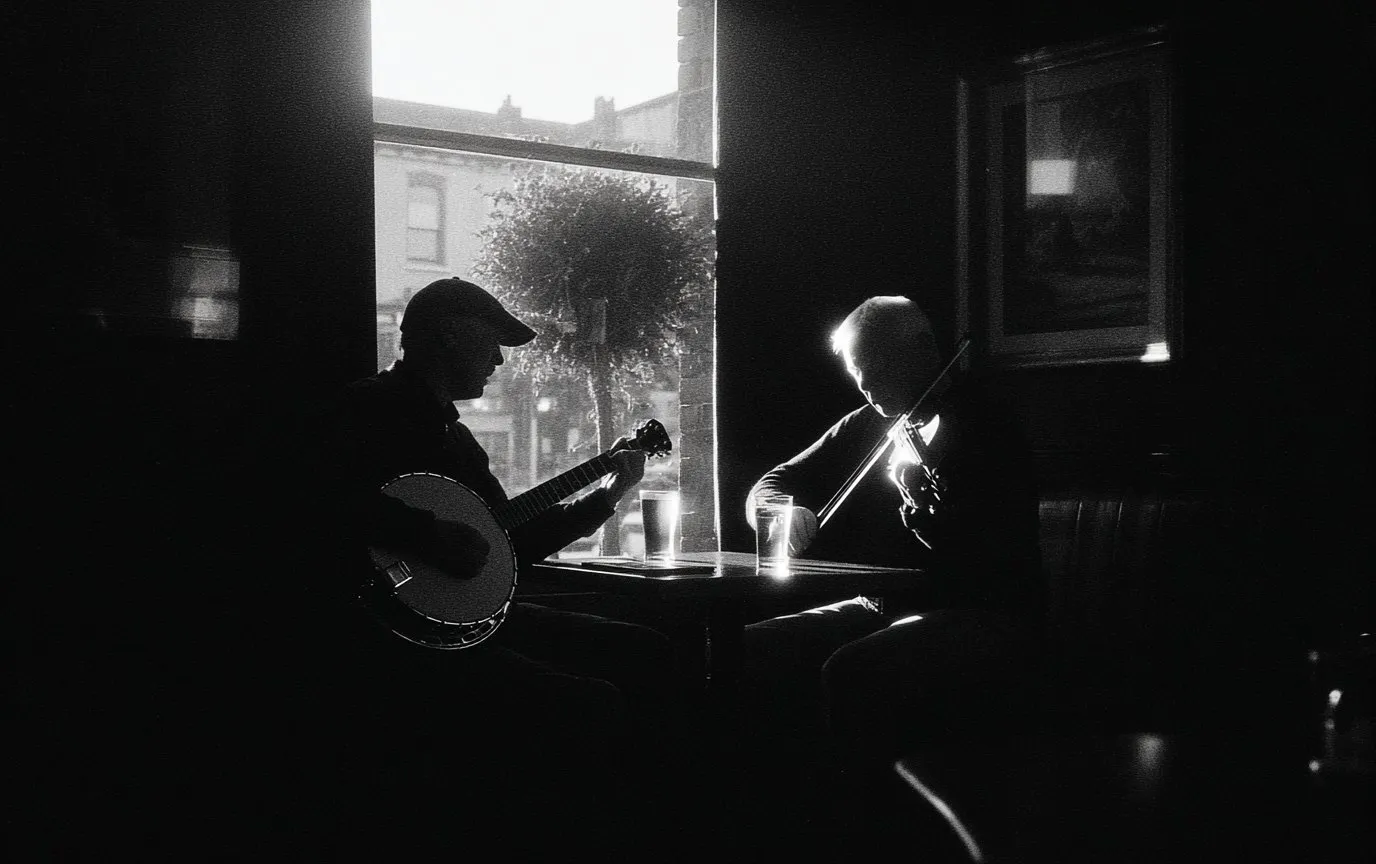
Your version of a tune, on its own page with notation, tab and playback, credited to you.
Paste any ABC and get tab for GDAE instruments. Free, in your browser, nothing uploaded.
O’Neill’s and Kerr’s collections, every tune on its own page with ABC, tab and playback.