Irish tenor banjo tuner: GDAE

Free, in the browser, nothing recorded.

Tap a string to hear its reference tone and tune to it by ear. The microphone pauses while a tone sounds.

Microphone tuner

Tune your irish tenor banjo

Listens through your microphone. Nothing is recorded and nothing leaves your browser.

Irish tenor banjo

The fiddle's tuning, an octave down

A free online tuner for Irish tenor banjo. It listens through your microphone, works in the browser with nothing to install, and covers GDAE, CGDA and GDAD.

Worth knowing: the Irish tenor banjo sounds an octave below the fiddle but is written at fiddle pitch. It is a transposing instrument, and it is why the tab on this site, and in every published Irish banjo book, is calculated from the written pitch rather than the sounding one.
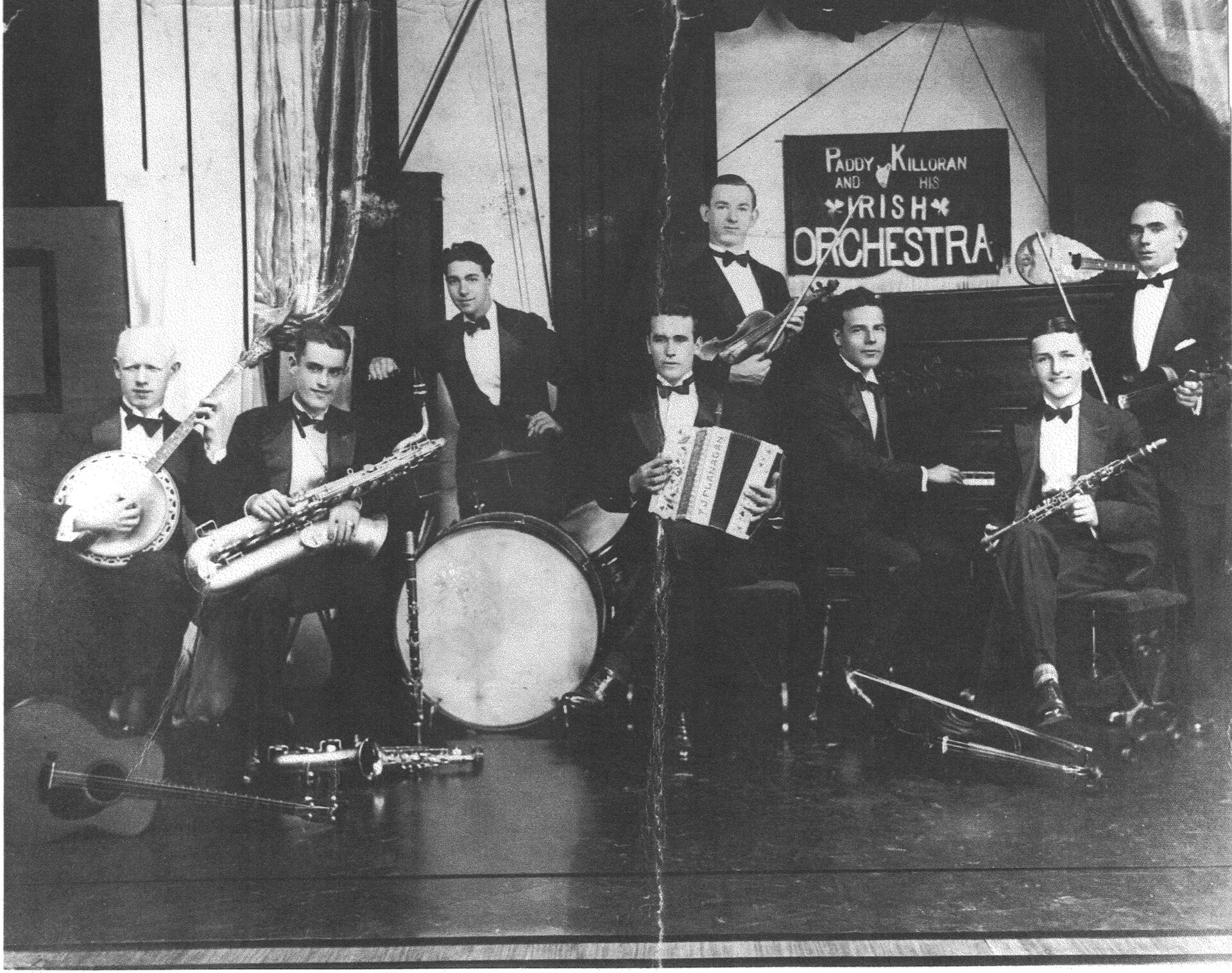
Paddy Killoran's Irish Orchestra photographed around 1930, a dance band with two fiddles and a tenor banjo
Michael "Whitey" Andrews on tenor banjo, with Paddy Killoran and Paddy Sweeney on fiddles.Paddy Killoran's Irish Orchestra, c.1930. Public domain, via Wikimedia Commons. Source
Choosing

Which tuning to use, and what for

The tuning you choose decides what the instrument is good at. This is the part that is rarely written down.

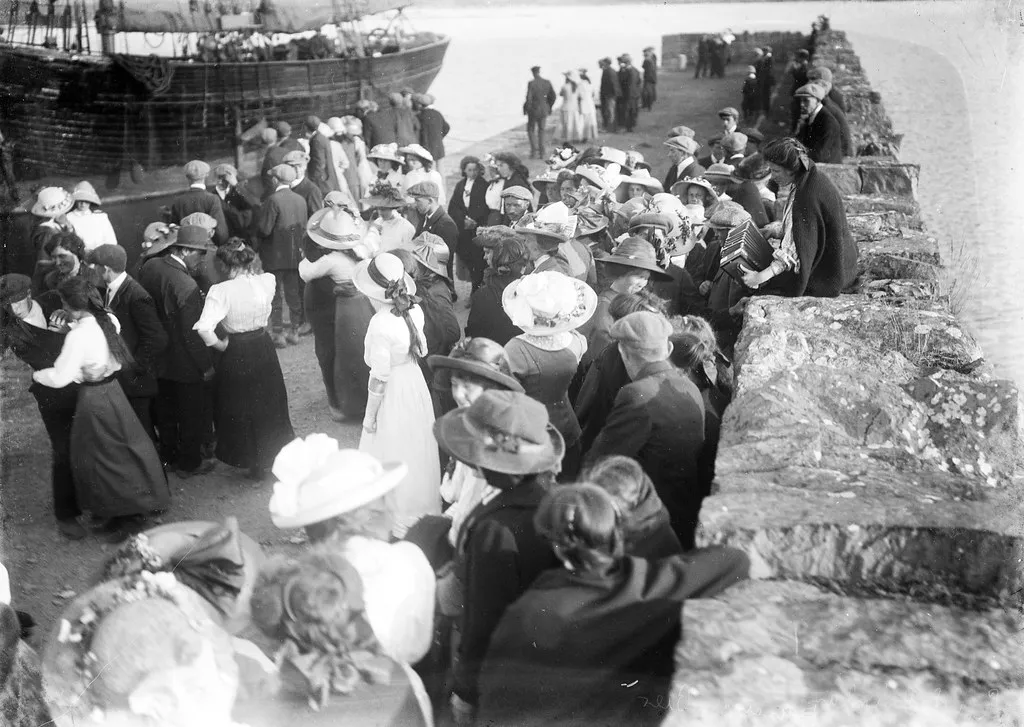
People dancing on a pier at the Kilmakilloge Pattern in County Kerry, 1913, with a melodeon player
Melodeon and dancing. The closest thing in the set to where these tunes were actually played.National Library of Ireland on The Commons. Source · No known copyright restrictions
GDAE

Melody playing, which is what Irish tenor banjo is for. Matches fiddle and mandolin fingering exactly, so every tutor, tab book and session assumes it. Use this unless you have a specific reason not to.

CGDA

Jazz, trad jazz and dance band repertoire, which is what the instrument was originally built for. Chord shapes and written music for the tenor banjo before the 1960s assume CGDA.

GDAD

Accompaniment. Dropping the top string to D gives you an open drone that sits under tunes in D and G without deciding between major and minor. You lose the top E, so melody playing above the second position gets awkward.

Setup

String gauges by scale length

Gauge depends on scale length, not on whether the instrument has 17 or 19 frets. A shorter scale needs heavier strings to reach the same pitch at a playable tension. Measure from the nut to the bridge.

Scale length4th (G)3rd (D)2nd (A)1st (E)
17 fret, 19 to 21 inch.040w.030w.020.013
19 fret, 21 to 23 inch.036w.026w.018.012
Long, 23 inch and over.034w.024w.016.011

Starting points, not gospel. Players run heavier or lighter to taste, and a wound third is common on shorter scales. Check against your string maker's own chart before ordering, since sets vary between brands.

FAQ

Irish tenor banjo tuning questions

Everything people ask before they tune up.

  • Yes, completely. There is no account, no trial, no limit on how often you use it and no advertising. It covers GDAE, CGDA and GDAD, and it will stay free.

  • No. It runs in your browser and uses your microphone directly. There is no app to download and nothing to sign up for. Your browser will ask permission for the microphone the first time.

  • No. The audio is analysed in your browser frame by frame and thrown away. Nothing is recorded, nothing is stored and nothing is sent to a server. You can disconnect from the internet after the page loads and it still works.

  • GDAE. It is fiddle tuning an octave lower, so the tunes fall under your fingers the way every Irish tutor and tab book assumes. CGDA is the original tenor banjo tuning and is still right for jazz.

  • Accompaniment rather than melody. Dropping the top string from E to D gives a droning open D under tunes in D and G, which suits backing. It costs you the top E, so melody playing gets awkward higher up the neck.

  • Accurate enough to tune by. This one uses autocorrelation rather than an FFT peak, which means it locks onto the fundamental instead of a louder harmonic, and that is exactly the failure mode on a banjo's bright top end. It reads in cents, and anything within five cents is in tune by any practical standard.

  • A low G on a tenor banjo is 98 Hz, and phone and laptop microphones roll off badly down there. Play the string harder, get closer to the microphone, and mute the others so the tuner is not hearing sympathetic ringing.

  • GDAE, low to high: G2, D3, A3, E4. That is the same as a fiddle or mandolin, an octave lower, which is why Irish players use it: the tunes sit under the fingers exactly as fiddle players play them.

  • Down on three strings and up on one. Standard tenor tuning is CGDA, a fifth below GDAE on the bottom three. Going to GDAE means the C string goes up to G, the G up to D, the D up to A, and the A up to E. Every string rises, so slacken first and come up to pitch slowly. Standard CGDA strings will feel tight and may snap, which is why gauges matter.

  • Possible if you use CGDA gauges. Fit a set intended for GDAE at your scale length, use the table above, and come up to pitch over a few minutes rather than all at once. A nut cut for heavier strings may also need easing.

  • It depends on scale length, not fret count, and that is why the question never gets a straight answer on forums. A 17-fret banjo with a 19 inch scale needs heavier strings than a 23 inch instrument to reach the same pitch at the same tension. The table above gives a starting point for each.

  • Tune the A string to a reference, then tune each other string to it in fifths. Fret the D string at 7 and it should match the open A. Fret the G at 7 and it matches the open D. Fret the A at 7 and it matches the open E. Fifths are harder to hear than octaves, so a clip-on tuner is worth the money at the start.

Now learn the chords