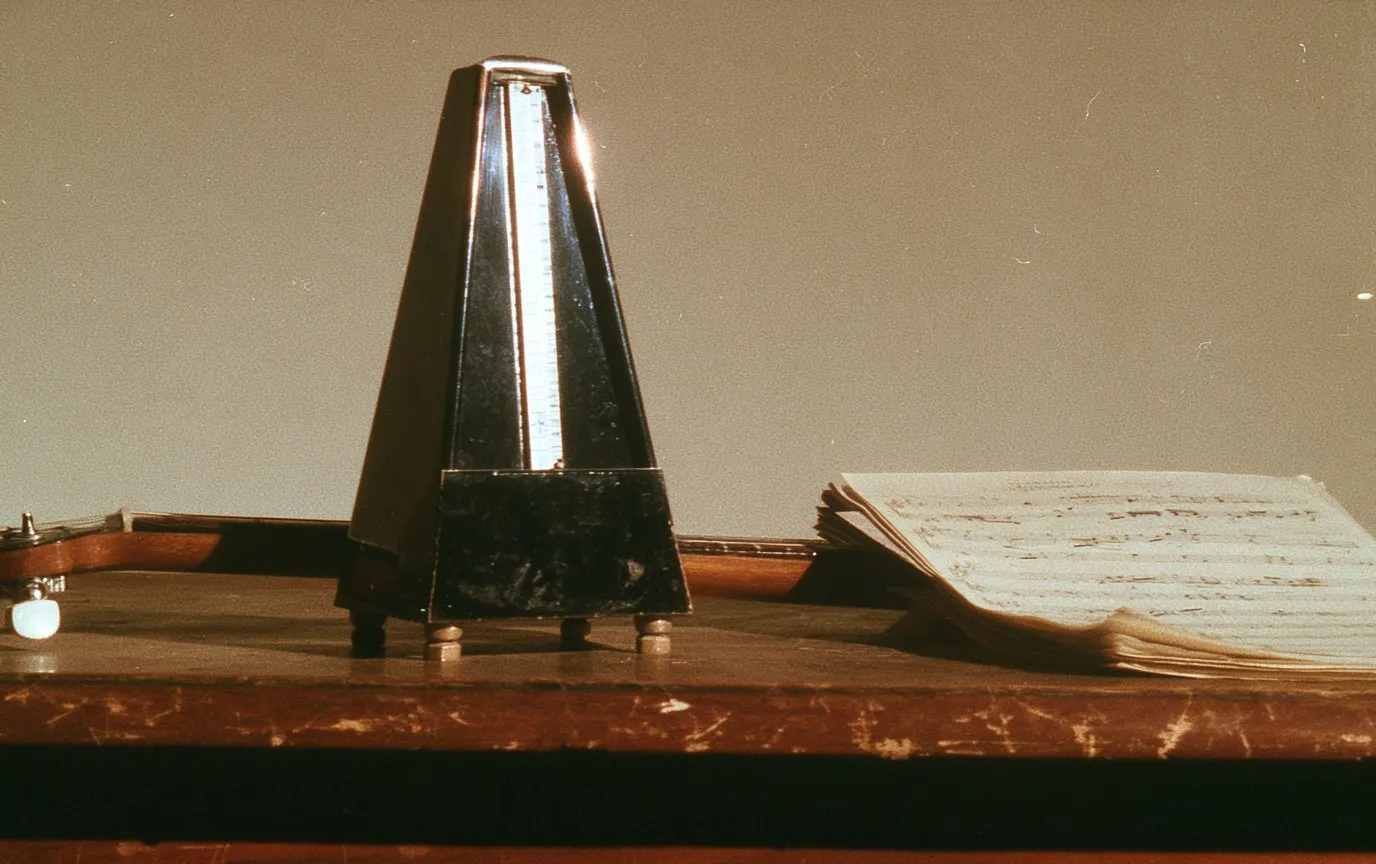
Irish music metronome
Pick a tune type and it clicks the beat that type is counted in, at session tempo. A reel is counted in half notes and a jig in dotted quarters, so the same number means two different speeds. This one names the note value every time.
One click is a half note. 2 to the bar, first one accented.
A reel runs 100 to 124 at a session. Start slower than that.
Which number do you set?
Irish sources quote tempo in three different ways and rarely say which one they mean. The dance world counts bars per minute. Metronome apps count individual beats. And the beat itself is a different note value depending on the tune type.
So a bare number tells you nothing. A reel and a hornpipe both written as 113 are 56.5 and 28.3 bars per minute, which is not a small difference. Set the click to the eighth notes you are playing rather than to the beat you are counting and you will be running at two or three times the right speed inside a minute.
Both columns below describe the same speed. Bars per minute is what a set musician counts. The metronome column is what you type into this page or into a phone app, and it only means something with the note value beside it.
| Tune type | Metre | Bars per minute | Metronome | One click is |
|---|---|---|---|---|
| Reel | 2/2 | 50 to 62 | 100 to 124 | half note |
| Jig | 6/8 | 54 to 62 | 108 to 124 | dotted quarter note |
| Hornpipe | 4/4 | 40 to 50 | 160 to 200 | quarter note |
| Slip jig | 9/8 | 38 to 41 | 113 to 124 | dotted quarter note |
| Polka | 2/4 | 60 to 70 | 121 to 140 | quarter note |
| Slide | 12/8 | 37 to 41 | 132 to 163 | dotted quarter note |
Bars-per-minute ranges are Alan Ng's, from irishtune.info. Click ranges come from set dancing groups who publish both units together. The slide row's two ranges come from different sources and do not multiply out exactly; the click figure is the one to set.
The two types with no tempo
The pills above stop at six on purpose. Two of the types in this library have no session tempo to quote, and inventing one would be worse than leaving it out.
Air. Free rhythm is the whole point of an air. Putting a metronome to one removes the thing that makes it an air, and any source quoting a BPM for one has invented it.
Set dance. Set dances are tied to one particular dance with its own steps, so the speed is whatever that dance wants rather than a figure for the type.
Questions about Irish tune tempos
Between 100 and 124 beats per minute counting half notes, which is the same thing as 50 to 62 bars per minute. If your metronome is counting quarter notes that is 200 to 248, and if it is counting the eighth notes you are actually playing it is 400 to 496. The number on its own is meaningless without the note value, which is why this page names it every time.
108 to 124 dotted quarter notes, which is 54 to 62 bars per minute. A jig is in 6/8 and it is counted in two, so you want two clicks per bar with three notes played to each click. Setting the metronome to the eighth note instead gives six clicks per bar and a number three times too high.
Because it is clicking the notes you are playing rather than the beat you are counting. In a jig you play six eighth notes to a bar but you count two beats, so the click belongs on the dotted quarter. This is the single most common practice mistake in Irish music and it is a unit problem, not a playing problem.
A bar holds several beats, so the two numbers are never the same. Dancers, set musicians and most Irish tempo sources quote bars per minute. Metronome apps count individual beats. A reel at 50 bars per minute is 100 beats per minute counting half notes, and both describe one speed. Sources rarely say which unit they mean, which is how "reel 113" and "hornpipe 113" end up looking identical while meaning 56.5 and 28.3 bars per minute.
Slower than the slowest figure on this page. Session tempo is where a tune ends up, not where it is learned. Take it to a speed where every note lands cleanly, then move it up a few clicks at a time. Instructional recordings often run reels around 41 bars per minute, well under the 50 a listening session would use.
Yes. It is generated in your browser with the Web Audio API rather than played from a sound file, so once the page has loaded there is nothing left to fetch. Turn off your connection and it keeps clicking.
Because free rhythm is the whole point of an air. The phrasing follows the words and the singer, not a pulse, and putting a metronome to one removes the thing that makes it an air. Any source quoting a BPM for a slow air has invented it.
No, and the gap is wide enough to matter. A listening session runs reels around 50 to 55 bars per minute where set dancers want 58 to 62, because the dance needs the drive. Competition speeds are set by the dancing organisations rather than by musicians and vary by grade. The ranges on this page cover session playing.
Where next
The tempo figures in full, then something to play to them.
Every tune type, both units, where the numbers come from and why they disagree.

O’Neill’s and Kerr’s collections, every tune with notation, GDAE tab and playback.

The right hand is what holds the tempo. Alternate picking, triplets and where the weight goes.