How many strings does a banjo have?
Five, usually. Four if it is a tenor or a plectrum banjo, and six exists. For playing Irish tunes you want four. The two common banjos are built for different jobs and the fifth string is the reason, and The Dubliners carried one of each, which is the clearest answer anybody has given.
By TradTabPublished
- Most banjos have
- Five strings
- For Irish music
- Four, a tenor banjo tuned GDAE
- Bluegrass banjo
- 5 strings, GDGBD, 22 frets
- Also exists
- Plectrum, 4 strings and a long neck. Banjo guitar, 6 strings
- The fifth string
- A short drone starting at the 5th fret
- Can you play Irish on a 5-string
- Yes, and people do. Sessions are not built around it
What are the different types of banjo?
Most banjos have five strings. That is the standard American instrument, the bluegrass and old-time banjo, and it is what most people picture. Its fifth string is short, starts halfway up the neck and has its own peg sticking out the side, which is the quickest way to identify one from across a room.
Some have four, and there are two different four-string banjos. A tenor has a short neck of 17 or 19 frets and is the instrument Irish traditional music uses. A plectrum has a long neck of around 22 frets, the same length as a 5-string but without the short drone. They are not interchangeable and shops do mix them up.
Six-string banjos exist and are tuned like a guitar, EADGBE. They are made for guitarists who want a banjo sound without learning a new instrument, and almost nobody in Irish traditional music plays one.
So the count on its own does not tell you much. What tells you is the neck length and whether there is a peg poking out of the side of it.
| Strings | Which banjo | Tuning | Frets | What it is for |
|---|---|---|---|---|
| 5 | Bluegrass or old-time | GDGBD | 22 | American folk. Fingers or clawhammer |
| 4 | Tenor, short neck | GDAE for Irish, CGDA originally | 17 or 19 | Irish melody, and trad jazz |
| 4 | Plectrum, long neck | CGBD | about 22 | Jazz and dance band chording |
| 6 | Banjo guitar | EADGBE | about 22 | Guitarists wanting a banjo sound |
What is the fifth string on a banjo for?
It is a drone. The fifth string works differently from the other four. It is short. It starts at the fifth fret, it has its own tuning peg sticking out of the side of the neck, and it is tuned to a high G above every other string on the instrument. It is almost never fretted.
What that gives you is a drone. Strum all five open strings on a banjo in standard GDGBD and you get a G major chord without touching the fretboard, because that is what the tuning spells. The high G rings through everything you play and it is most of what people recognise as the banjo sound.
A tenor banjo has four full-length strings tuned in fifths, GDAE, which is fiddle tuning an octave down. Nothing drones. Nothing rings underneath. Every string is there to carry the tune.
So one instrument is built to sound a chord and a rhythm, and the other is built to play a line. That decision was made before either of them reached Ireland, and it is why the advice comes out the same way every time.
| Irish tenor banjo | 5-string banjo | |
|---|---|---|
| Strings | 4, all full length | 5, one short drone |
| Tuning | GDAE, in fifths | GDGBD, an open G chord |
| Frets | 17 or 19 | 22 |
| Scale length | 50 to 58.5cm (20 to 23in) | about 67cm (26.25in) |
| Played with | A thin plectrum | Fingers, picks or clawhammer |
| Built for | Melody | Chords and rhythm |
| Shares fingering with | Fiddle, mandolin, octave mandola | Nothing else in the session |
Which banjo did The Dubliners play?
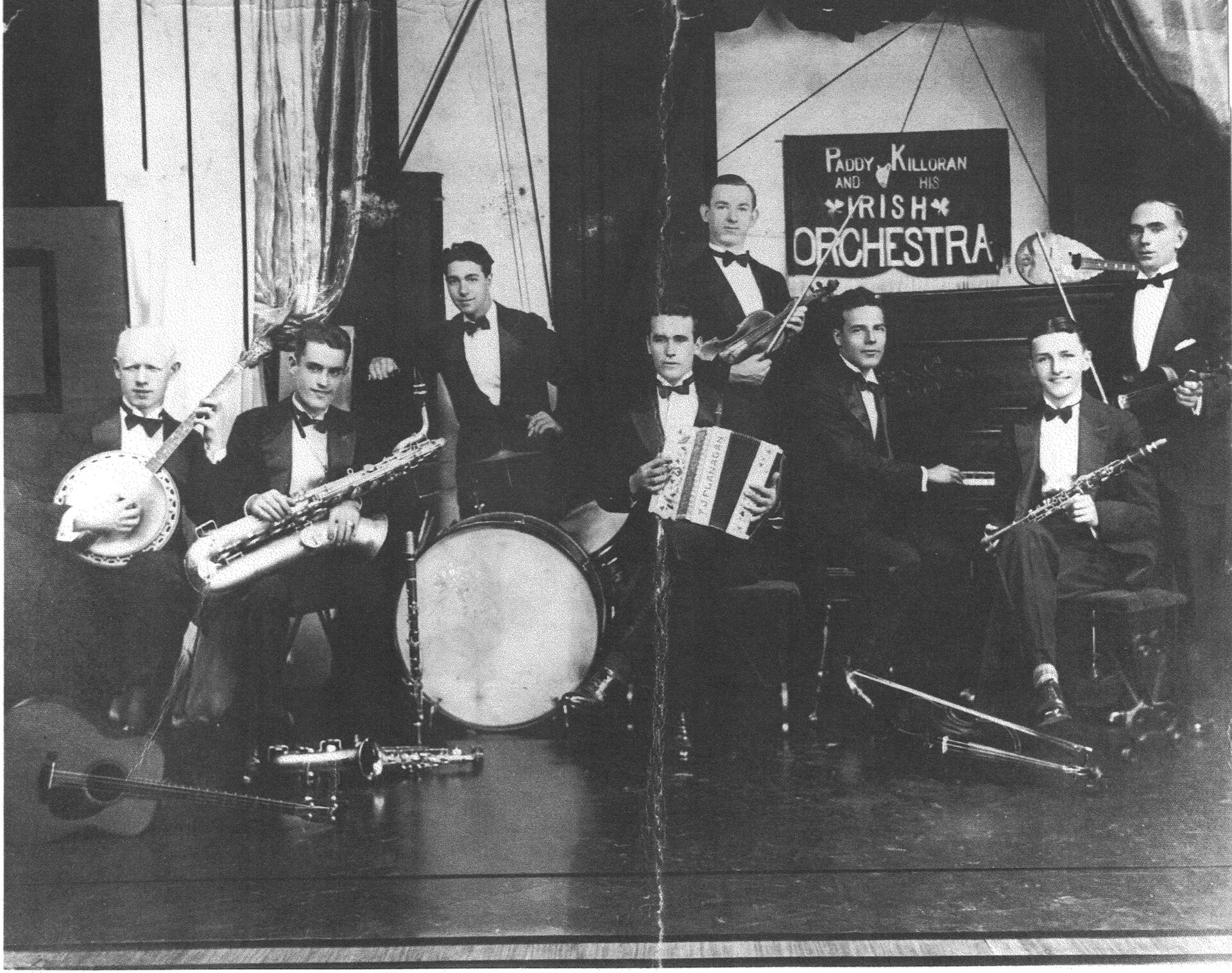
Barney McKenna played a 19-fret four-string resonator tenor, and he is the reason GDAE became the standard tuning for the instrument in this music. He played the tunes.
Luke Kelly, in the same band, played a 5-string. He used it to accompany his singing. Nobody was asking it to carry a reel.
One band, one decade, both instruments, and each one doing the thing it was built for. That is the answer to the question in a sentence: the tenor is a tune instrument and the 5-string is an accompaniment instrument, and Irish traditional music is mostly tunes.
McKenna revolutionised the technique of the nineteen-fret, four-string, resonator tenor banjo, thereby establishing the instrument’s place within the genre of Irish traditional music.
Where did the tenor banjo come from?
Not from Irish music, and that is why the answer to this question comes out the way it does. A belief worth correcting first, because it is repeated everywhere: the tenor banjo has not been part of Irish traditional music since the nineteenth century. The banjo reached Ireland in 1844 with a touring American minstrel troupe, and what arrived was a fretless five-string used for accompaniment.
The four-string tenor did not appear until the early 1900s, and it came through dance bands and jazz. It was a plectrum instrument built to play single lines and cut through a loud room, which is exactly the job an Irish tune needs doing. The five-string was already here and was already doing something else.
The full story is worth reading on its own: is the banjo Irish? runs from West African gourd lutes to Barney McKenna, with dates.
How different are a tenor and a 5-string to hold?
A standard 5-string banjo has a scale length of about 26.25 inches and 22 frets. An Irish tenor runs from roughly 20 inches on a short-scale 17-fret up to 23 inches on a long-scale 19-fret. The neck you are reaching along is a different length by a wide margin.
Tuning in fifths matters as much. Seven semitones between each pair of strings puts an Irish tune under your fingers in the shape a fiddler already plays it, which is why a tenor banjo player and a fiddle player can watch each other and learn something. GDGBD is not in fifths and does not do that.
The four GDAE instruments on this site, tenor banjo, mandolin, octave mandola and bouzouki, are all reading the same fingering. A 5-string is outside that family.
Can you play Irish music on a 5-string banjo?
Yes, and people do. This is the part most comparison pages leave out, and leaving it out makes them wrong. Ken Perlman has spent a long career making clawhammer work for Irish tunes and had an instrument built for the extra volume. Dan Walsh plays Irish material on 5-string. Cathy Moore is named repeatedly in discussions of clawhammer players who genuinely play Irish melodies rather than accompanying them.
The technique is not a straight choice between clawhammer and bluegrass rolls either. Players working on this material use up-picking and old-time fretting-hand ideas, and treat it as its own approach rather than an import.
What you give up is worth naming plainly. You will not share fingering with the fiddler beside you. Published Irish tab and tutors assume GDAE, so almost none of it transfers. In a loud pub session a plectrum on a tenor cuts through in a way that takes serious work to match. And you will have nobody next to you to copy.
Does banjo tab work for both?
Every piece of tab on this site is written for GDAE. That serves the tenor banjo, the mandolin and the octave mandola with identical fret numbers, and the bouzouki in GDAD separately, because three of its four strings match.
None of it works on a 5-string in GDGBD. Our converter handles six tunings and that is not one of them. If you are set on a 5-string, this site will give you the tunes, the tempos and the histories, and you will have to work out your own fingering.
That is a straight limitation rather than a recommendation. It is worth knowing before you buy something on the strength of a tab library that does not cover it.
Questions about 4-string and 5-string banjos
Five on the standard American banjo, and that is what most people mean. Four on a tenor or a plectrum banjo. Six on a banjo guitar, which is tuned like a guitar. Irish traditional music uses the four-string tenor, tuned GDAE.
Four. An Irish tenor banjo has four full-length strings tuned GDAE, which is fiddle and mandolin tuning an octave lower, on a short neck of 17 or 19 frets. There is no drone string.
The fifth string, and everything that follows from it. It is short, starts at the fifth fret, has its own peg on the side of the neck and is tuned to a high G above every other string, so a 5-string sounds a chord and a drone. A tenor has four full-length strings tuned in fifths and is built to play a single line.
Because it is a drone rather than a melody string. It runs from the fifth fret to a peg in the side of the neck, so it is about three quarters the length of the others and sounds a high G above all of them. It is rarely fretted, and it rings under whatever you play.
Yes. A banjo guitar has six strings tuned EADGBE, exactly like a guitar, so a guitarist can play one immediately. It is a legitimate instrument and it is almost never used in Irish traditional music.
Not really, and it is the wrong thing to attempt. The four long strings can be brought to GDAE with the right gauges, but the scale is around 26.25 inches against a tenor's 20 to 23, so the tension gets awkward, and the fifth string still sits there as a high G drone through everything you play. If you want to play Irish melody, a tenor is the instrument.
A 4-string tenor, tuned GDAE. It is built for melody, it shares fingering with the fiddle and the mandolin, and every Irish tutor, tab book and session assumes it. A 5-string is built around a drone string and is an accompaniment instrument by design.
It is a short drone. It starts at the fifth fret, has its own peg on the side of the neck, and is tuned to a high G above all the other strings. It is rarely fretted and rings through whatever you play, which is most of the sound people recognise as a banjo.
Yes. Ken Perlman, Dan Walsh and Cathy Moore all play Irish material on 5-string, generally using clawhammer and up-picking rather than bluegrass rolls. It is uncommon rather than impossible. You lose shared fingering with the other melody players and almost all published Irish tab.
GDAE, the same as a fiddle and a mandolin but sounding an octave lower. The low G is 98 Hz. Barney McKenna of The Dubliners is credited with establishing it as the standard for the instrument in Irish traditional music.
A tenor is a 4-string banjo, but not every 4-string banjo is a tenor. A plectrum banjo also has four strings, with a longer neck and a different tuning, and it is the wrong instrument for Irish tunes. Check the listing says tenor, 17 or 19 frets.
The tenor, if you want to play tunes. There are no chord shapes to learn and no right-hand roll patterns, so you play a recognisable melody sooner. The 5-string asks you to learn a picking technique before you have a tune.
No. Tab is written for a specific tuning. GDAE tab covers the tenor banjo, mandolin and octave mandola with the same fret numbers. A 5-string in GDGBD needs its own tab, and this site does not publish it.
The tenor arrived through dance bands and jazz well into the twentieth century, and it was a plectrum instrument playing single lines, which is what Irish traditional music is. The earlier minstrel and 5-string banjos in Ireland were used mainly for accompaniment.
Keep reading
 Read the guide
17-fret or 19-fret tenor banjo?
Try both with the same short tune. A shorter scale brings the frets closer together; a longer scale changes reach and string feel. The best fit depends on the actual instrument and its setup.
 Read the guide
What to look for in a first tenor banjo
Most first banjos are chosen on price and spec, and most of the disappointment comes from setup and from the wrong strings. Here is what each price band actually buys, what to measure, and the two things worth more than an extra two hundred euro on the instrument.
 Read the guide
Is the Irish tenor banjo hard to learn?
Easier than the fiddle, harder than it looks on YouTube. The notes come quickly and the right hand takes years. Here is an honest account of what is actually difficult, what is easier than people expect, and how long it takes to be useful at a session.